Product Certification for Your Market: How We Support CE, FCC, UKCA and PSE
Certification is one of the first questions B2B buyers ask—and one of the most misunderstood. Which certificates does a product need? Who should hold them? And who pays? This article explains how certification works for electronic personal care products and how Thankgain supports buyers in different markets.
Every market has its own requirements
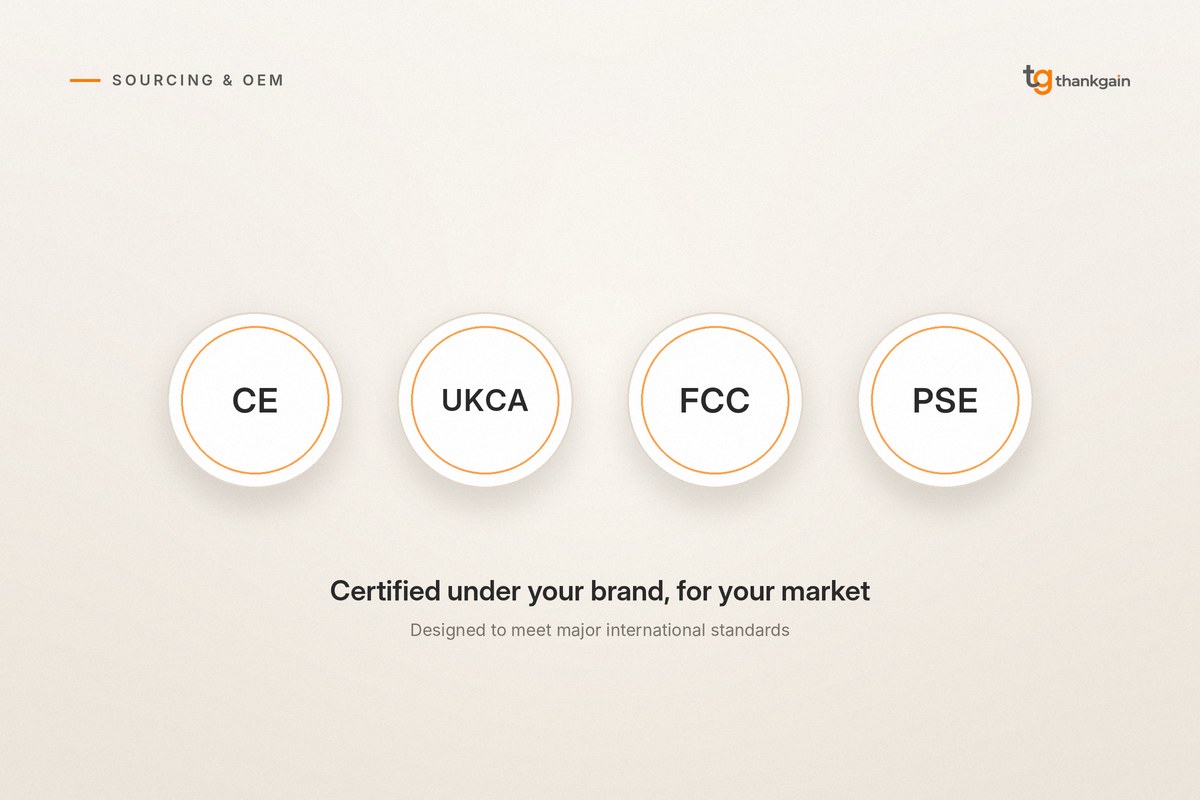
There is no single global certificate. Each market sets its own rules for electrical safety, electromagnetic compatibility and, for some products, health-related regulation. Common examples include:
- CE – European Union
- UKCA – United Kingdom
- FCC – United States (electromagnetic emissions)
- PSE – Japan (electrical appliance safety)
Depending on the product category and market, additional requirements may apply. Some products—such as certain IPL hair removal devices—may be regulated as medical devices or under similar rules in some markets. Requirements change over time, so buyers should always confirm the current rules for their market.
Why certificates are best held under your brand
For brand owners, holding certification in your own company’s name has clear advantages:
- The certificate matches the brand name on the product and packaging.
- Your supply chain remains confidential—the manufacturer’s name does not appear on your documents.
- You control the documentation when dealing with retailers, platforms and authorities.
Because our buyers sell into many different markets, and most prefer certificates in their own name, we do not hold certificates under the factory name. Instead, we work with each buyer to certify for their specific market.
Designed to meet major standards
Our products are designed and engineered to meet major international standards from the start. This makes the certification process more efficient: we provide samples and technical documentation to support testing for your target market.
How certification costs work
- Medical-device certifications (such as FDA or MDR, where applicable): certification and annual maintenance costs are borne by the buyer.
- Non-medical certifications (such as CE, UKCA, FCC or PSE): a certification fee applies, which can be credited against your orders once an agreed order volume is reached.
A practical certification workflow
- Confirm your market – tell us where you plan to sell.
- Identify requirements – agree on the certifications your market requires.
- Prepare samples and documents – we supply test samples and technical files.
- Testing – carried out through an accredited testing body under your brand.
- Launch – certified products produced under your brand for your market.
Plan certification early
Testing can take several weeks, so it should be part of your launch plan from the beginning—not an afterthought. Tell us your target market when you first inquire, and we will help you plan the certification path alongside product selection and customization.
Have questions about certification for a specific product or market? Contact us.