How to Choose an IPL Hair Removal Device for Your Private Label Brand
At-home IPL (Intense Pulsed Light) hair removal is one of the fastest-growing categories in personal care. For distributors and brand owners, it is also a category where product choice matters: specifications, comfort, compliance and packaging all shape how a device performs in your market and how your customers review it. This guide covers the key points we discuss with B2B buyers before they select an IPL device for private label.
1. Start with the core optical specifications
An IPL device works by emitting broad-spectrum light that targets the pigment in the hair. A few numbers tell you most of what you need to know:
- Wavelength range – Most home-use devices operate in roughly the 500–1200 nm range. A filtered lower cut-off helps reduce unnecessary short-wavelength light reaching the skin.
- Energy density (J/cm²) – Look at the range and the number of levels, not just the maximum. Multiple levels let users start low and adjust to their skin sensitivity.
- Treatment window size – Around 3 cm² is common for full-body home use. Larger windows treat faster; smaller windows give more precision on the face and bikini line.
- Flash count – Lamp life is usually quoted in flashes. Several hundred thousand flashes is a typical expectation for a device intended to last for years of household use.
2. Comfort features drive reviews
For end users, comfort is often what separates a five-star device from a returned one. Contact cooling—such as a sapphire cooling window—keeps the skin cool during each flash and makes treatment more comfortable. Other features worth checking include:
- Manual and automatic (continuous) flash modes for small and large areas
- Dedicated modes for different body areas
- A clear level and mode display
- Ergonomic weight and grip, especially for longer sessions
3. Safety guidance and user information
IPL is suitable for some skin and hair combinations and not for others. It generally works best on lighter to medium skin tones with darker hair, and is not suitable for very dark skin or for white, grey, red or light blonde hair. A good device comes with a clear skin-tone chart, patch-test instructions and an English user manual that can be adapted for your market. Make sure the information your customers receive is accurate and does not overstate results.
4. Plan compliance for your target market early
Requirements differ by market, and in some regions IPL hair removal devices fall under medical device or similar regulations. Before you commit to a product, confirm which certifications your market requires, who will hold them, and how long testing will take. At Thankgain, our products are designed to meet major international standards, and we support certification under your own brand for your target market. You can read more in our article on product certification for your market.
5. Think about the brand experience
Private label is more than a logo on the device. Consider:
- Colors and finishes – Color options help you build a range or match your brand palette.
- Packaging – Gift-style color boxes, inserts and accessories (goggles, razor, adapters) shape the unboxing experience.
- Plugs and power – Make sure the adapter matches your market (US, UK, EU, AU and others).
- Manuals and labeling – Language, symbols and regulatory information for your market.
6. Request samples and compare
Always test samples before placing an order. Check build quality, flash consistency, noise, cooling performance and how the device feels in the hand. Compare how clearly the manual explains safe use.
Our IPL selection
We currently offer two curated IPL models for private label:
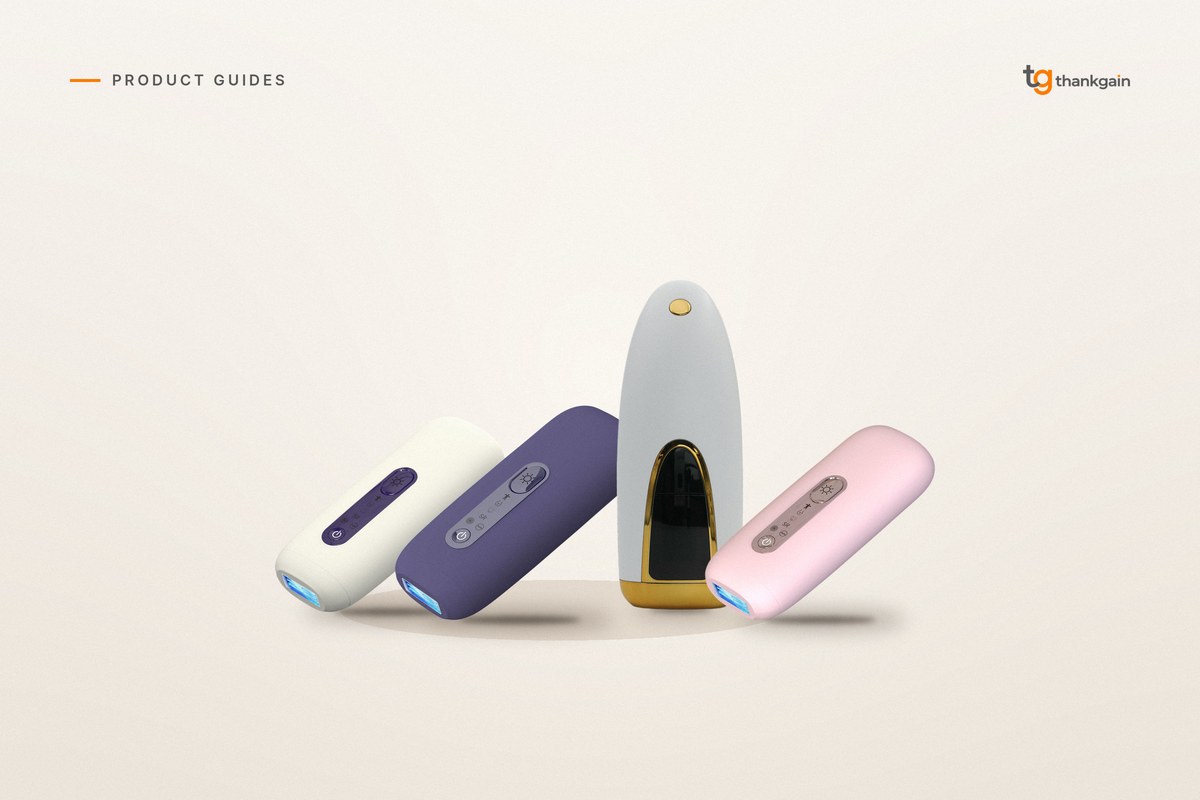
- SKN010 Sapphire Ice-Cooling IPL – 510–1200 nm, 5 energy levels, 4 modes, available in four colors.
- SKN003 Pro Sapphire Ice-Cooling IPL – 9 energy levels, LED display, lead grey or bright gold trim.
Both are available for OEM, ODM and private label. Contact us to discuss samples, customization and your target market.